Thursday, July 19, 2012

First Women's Rights Conference Anniversary


 HAPPY ANNIVERSARY, WOMEN VOTERS!

On July 19-20, 1848, Elizabeth Cady Stanton and Lucretia Mott spearheaded the first women's rights convention in American History.  Over 300 women and men came to Seneca Falls, New York to protest the mistreatment of women in social, economic, political, and religious life.  This marked the first public call for women's right to vote.

At the end of the conference 68 women and 32 men of the 300 attendees signed the Declaration of Sentiments.  This document was drafted by Elizabeth Cady Stanton, who used the Declaration Independence as her guide and listed eighteen "injuries and usurpations... on the part of man toward woman" (same number of charges the colonists leveled against the King of England) 

Those who attended the conference were vilified and mocked by the press who described the conference as "the most shocking and unnatural event ever recorded in the history of womanity." Yet, thanks to the countless numbers who have worked to preserve the history of the women's rights movement, Seneca Falls, NY is now the site of the  Women's Rights National Historical Park 

To honor democracy and the amazing legacy of the women's rights movement, be sure to register and vote!


Have a child and Change Your Brain


In today's encore excerpt - a new and growing body of research is revealing that there are marked and generally positive physiological changes that occur in a mother's brain as a result of giving birth to a child. Experiments and observations on human mothers and laboratory rats provide the evidence:

"Research suggests that motherhood enhances certain types of cognition, improves resistance to stress and sharpens some kinds of memory. On the face of it, the fact that the nervous system manages to transform a new mother from a self-centered organism into an other-focused caregiver is actually quite impressive. All it takes is for new neurons to sprout, certain brain structures to blossom in size and waves of powerful hormones to batter the pregnant woman's physiology. The result is a different and in some ways better brain -- or at least one capable of juggling the challenges of everyday life while maintaining a laserlike focus on the baby.

Who knew?

Excerpt from the following source:
Author: Craig Howard Kinsley and Elizabeth Meyer  
Title: "Maternal Mentality"
Publisher: Scientific American Mind
Date: July/August 2011
Pages: 25-29

Repository for Self-Published Works


 Project Gutenberg has opened a new venue supplementing their traditional collection of public domain classics. That collection of usually all the works, even minor ones, of major authors and the major works of minor authors now runs more than 40,000. 

But what about contemporary works, particularly by people who have not found or perhaps do not want to go with traditional publishers? Now Project Gutenberg has opened a separate collection and discovery area for such works referred to as a Self-Publishing Portal. Anyone can access and search the site to view and/or download documents. Contact us for more information.

Go for it!

Moodle To Drop Native Mobile Apps, Move to HTML5


Moodle HQ is ending development of native My Moodle mobile apps for iOS and Android, according to a blog entry posted by Moodle founding developer Martin Dougiamas last night. "After much thought Moodle HQ is changing how we support mobile development for Moodle," Dougiamas wrote. "Our current approach of native apps per platform was costing a lot while not moving very fast and not serving our community."

Instead of native versions of the apps, Moodle's mobile components will move to HTML5, which will allow updates to be released across platforms simultaneously and will allow for modularity and greater participation from Moodle's developer community. Dougiamas said the HTML5 version will lose a bit of speed but should also improve some areas of performance.

He said the iOS version of the mobile app will continue to be available and will continue functioning "for a long time yet." The Android version was never completed.

Moodle was purchased by Blackboard this year. I wonder if that has anything to do with the change of plans.


Wednesday, July 18, 2012

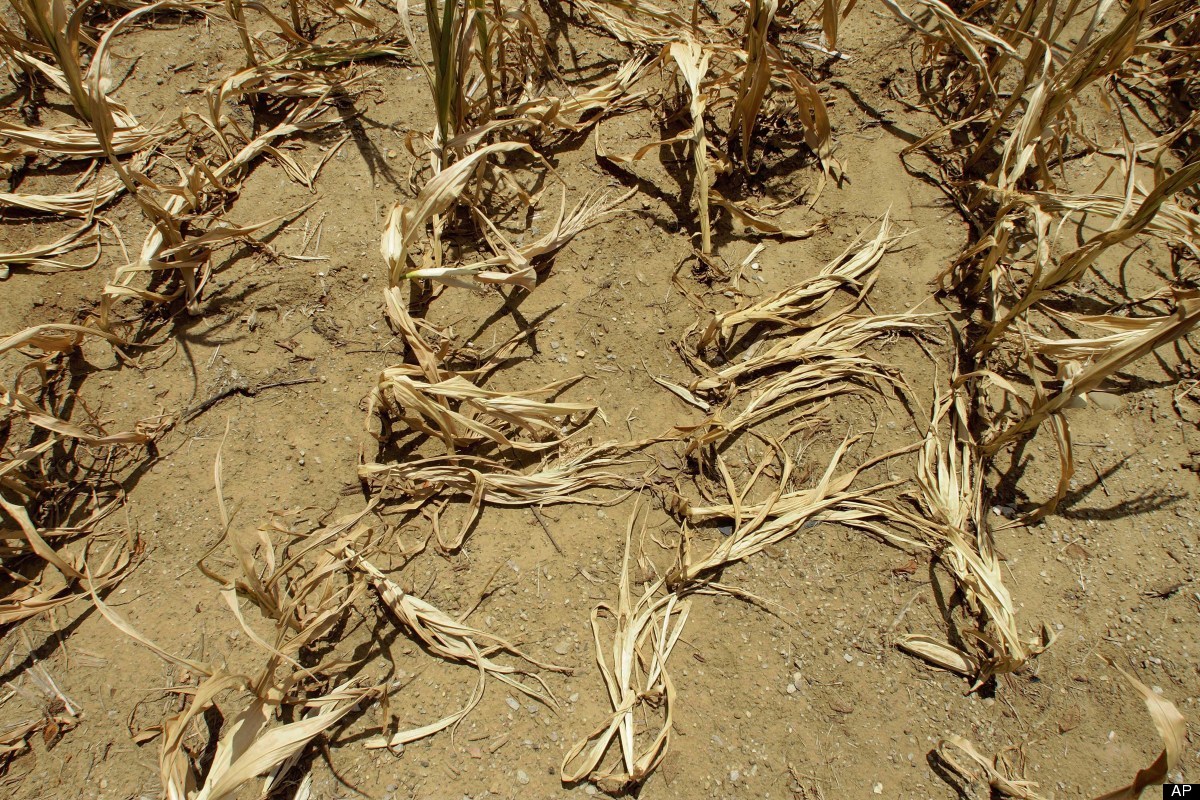
Dry Weather Spreads Across U.S

The National Oceanic and Atmospheric Administration (NOAA) said in a report on Monday that based on the Palmer Drought Index, 55 percent of the contiguous United States was under moderate to extreme drought in June. That is the largest land area in the United States to be affected by a drought since December 1956.

Commodity Weather Group (CWG) on Tuesday said over half of the Midwest would continue with severe moisture deficits and plenty of heat, particularly in the western corn belt. 


This is serious. The drought gripping the United States is the worst since 1956. Fifty-five percent of the continental U.S. was in a moderate to extreme drought by the end of June.


Thursday, July 12, 2012

Georgia State, Copyright, and You

After four years, a judge has finally decided upon the merits of the copyright lawsuit between Cambridge University Press, Oxford University Press, Sage Publications and Georgia State University.  Although the outcome legally affects only the northern third of Georgia,  this ruling will affect the way we do business in this library.

The library is sponsoring a web cast from the Association of College and Research Libraries (ACRL) in which the ACRL copyright committee will discuss the specific ruling of the Georgia State case in detail, the affect that the case will have on future fair use analyses, the impact on library policies such as course reserves and interlibrary loan, and the way we will work with academic publishers from now on. Anyone who is interested in attending will be welcome. Please let me know if you will be attending.

Learning Outcomes:
  • Understand the history of the Georgia State University copyright infringement lawsuit
  • Understand the judge’s decision in the Georgia State University copyright infringement lawsuit
  • Discover the impact upon Fair Use analyses
  • Recognize some of the local library policies that will need to change
  • Identify possible changes in the relationships between libraries and academic publisher
 Live Webcast
July 20, 2012 2 p.m.
Room 142

Revolutionary Plots

 "Revolutionary Plots" by Rebecca Solnit
 Read the first paragraph of Solnit's article about urban agriculture (community gardening) and thank Sandy Pearce for creating the Goodwin College community garden.

"THE ANTI-WAR POET and soldier Siegfried Sassoon reports that toward the end of World War I, Winston Churchill told him that war is the normal occupation of man. Challenged, Churchill amended this to “war—and gardening.” Are the two opposites? Some agriculture is a form of war, whether it’s clear cutting rainforest, stealing land from the poor, contaminating the vicinity, or exploiting farm workers, and some of our modern pesticides are descended from chemical warfare breakthroughs for the First World War. But gardening represents a much wider spectrum of human activity than war, and if war is an act of the state, gardening is far, far more ancient than city-states (if not nearly so old as squabbling)"

Read the rest HERE.

Source: Orion July/August Issue